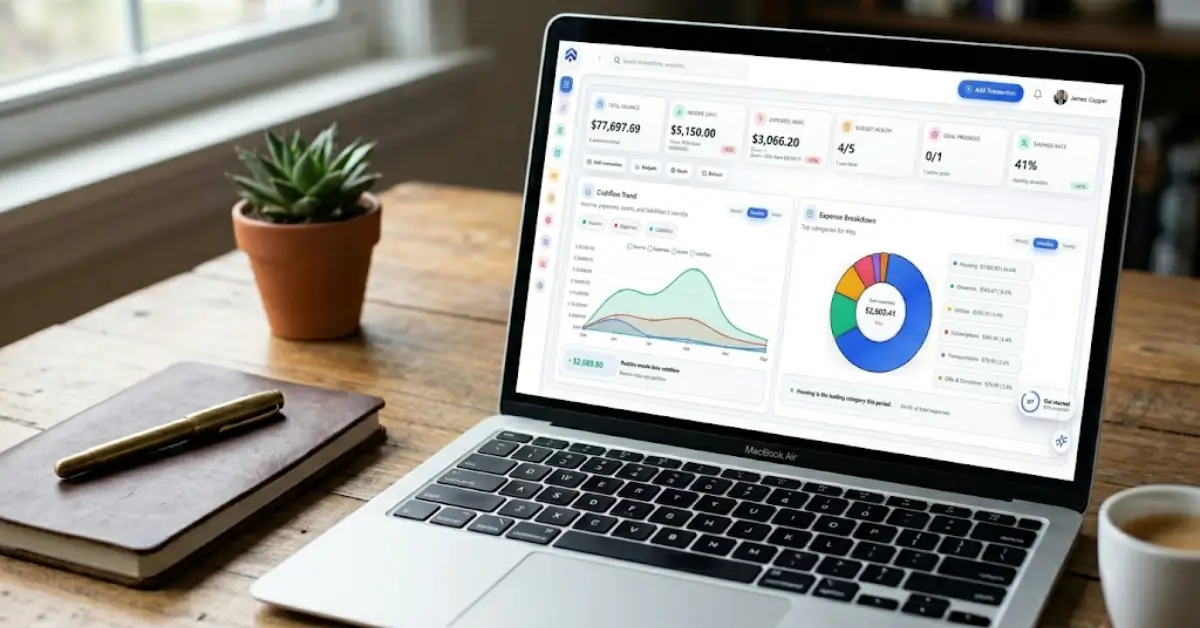



Roughly 78% of small business owners still track their books in spreadsheets. By 2027, that number will fall by half. The reason isn’t that Excel got worse – it’s that the alternative finally got good enough to switch.
I’ve spent the better part of a decade watching freelancers and small business owners wrestle with bookkeeping. Same pattern every year: build a clean spreadsheet in January, abandon it by March, panic in February when tax season hits, swear “next year I’ll stay on top of it.” Most don’t.
Something changed in 2025. The same AI models that powered chatbots and image generators became smart enough to read a crumpled receipt, predict which “Office Supplies” subcategory it belongs in, and post it correctly to your books – all in less time than it takes you to find your wallet. Once that happened, the spreadsheet’s time was up.
What Spreadsheets Were Actually Good At
Let’s give credit where it’s due. Excel and Google Sheets carried small business accounting for thirty years. They’re free (or nearly so). They’re flexible. They work offline. Anyone who’s spent ten minutes with one can build a usable budget.
That’s the floor. The ceiling is where it gets ugly.
Spreadsheets are terrible at:
- Categorizing transactions. Every line item is manual.
- Reconciling against your bank. Manual.
- Producing real financial statements. A P&L in Excel requires either a template or a working knowledge of accounting principles. Most owners have neither.
- Updating in real time. Your spreadsheet shows last week’s numbers. Always.
- Catching mistakes. A single typo can compound for months before anyone notices.
These weren’t crippling problems when the alternative was hiring a $300/month bookkeeper. For a solo freelancer or microbusiness, spreadsheets won by default.
The math just changed.
What AI Actually Does in Modern Bookkeeping
Skip the marketing language for a minute. Here’s what AI-powered bookkeeping tools actually do – concretely, as of mid-2026:
Auto-categorize transactions. You import a CSV from your bank. The AI reads each row’s merchant, date, and amount, then guesses a category from your existing setup. Right roughly 95% of the time. The other 5%, you correct it once and the system never makes the same mistake again.
Extract data from receipts. Take a photo of a Costco receipt – sixteen items, smudged thermal paper. The AI pulls out the merchant, total, date, and every individual line item in under three seconds. You confirm and save. Total time: maybe ten seconds.
Reconcile bank statements. Upload your bank’s CSV. The AI auto-detects columns (“debit,” “credit,” “narration,” “value_date” – whatever your bank calls them), normalizes the date format, and matches each line against what’s already in your books. Discrepancies get flagged for review.
Answer questions in plain English. “How much did I spend on dining last month?” “What’s my profit margin this quarter?” “Did I pay that Adobe subscription?” You type the question, you get a real answer with real numbers.
None of this is hypothetical. All of it shipped in mainstream tools by the end of 2025.
The Time Math Is Brutal
Here’s the comparison that ends the debate.
A typical freelancer doing books in Excel spends about three hours a month – entering receipts, categorizing transactions, reconciling against the bank, building a monthly summary. Multiply by twelve and you get 36 hours a year, plus another 8-10 hours during tax prep. Call it 45 hours.
The same workflow in an AI-powered tool: roughly 4-5 hours total. Per year.
That’s 40 hours back. A full work week. For a freelancer billing at $75/hour, that’s $3,000 in recovered billable time. The math doesn’t get tighter than that.
Which Categories of Bookkeeping Will Fall First?
Spreadsheet bookkeeping won’t disappear evenly. It’ll fall by category:
Falling first: Personal finance and side hustles. Single-stream income, occasional expenses, low complexity. AI tools handle this perfectly, and there’s no good reason for someone tracking $30K of side income to fight with VLOOKUP.
Falling next: Solo freelancers and consultants. Multi-client billing, scattered receipts, tax-deductible expenses across categories – exactly what AI was built to untangle.
Falling last: Multi-employee small businesses with complex needs. Payroll integration, inventory tracking, multi-entity accounting. AI is getting there, but established platforms like QuickBooks still hold ground here.
Won’t fall yet: Mid-market and enterprise accounting. Different conversation entirely.
What Does This Mean for Accountants?
There’s a popular take that AI will “replace accountants.” That’s lazy. Here’s the more honest version:
AI doesn’t replace accountants. It replaces bookkeepers. The data-entry tier – the people whose job was to type receipts into a ledger – is going away. The strategic tier – tax planning, entity structuring, audit defense, complex advisory – is getting more valuable, because business owners now arrive at the conversation with clean books and time to think.
If you’re a CPA, this is great news. If you’re a bookkeeper, it’s time to specialize.
Where Are the Honest Limitations of AI Bookkeeping?
I’m not selling the “AI does everything” line. It doesn’t.
AI bookkeeping tools still struggle with:
- Unusual business structures. Multi-LLC pass-throughs, foreign subsidiaries, complex partnership accounting. Hire a human.
- Tax strategy. AI can tag deductibles. It can’t decide whether to take the home office deduction or whether your S-corp election made sense.
- Audit defense. When the IRS asks why a $400 charge was a business expense, you need a human who can build a coherent story.
- Truly weird transactions. AI assumes patterns. Genuinely unprecedented transactions still need a human eye.
The realistic frame: AI handles the 90% of bookkeeping that’s routine. Humans handle the 10% that’s interesting. The 90% used to eat your weekends. Now it doesn’t.
How to Start Without Switching Everything at Once
If you’re spreadsheet-loyal and skeptical, here’s a low-risk experiment. Pick a month. Try an AI-powered tool – Accounte, QuickBooks AI, or Xero AI – in parallel with your spreadsheet. Import the same transactions both ways. At the end of the month, compare:
- How long did each take?
- Which gave you a more accurate picture?
- Which one would you actually maintain in December?
The answer almost always becomes obvious by week two. Then you stop maintaining the spreadsheet.
I’d be careful about one thing: don’t pick a tool just because it has the most features. Pick the one that handles your specific workflow well. For freelancers and small businesses, that usually means a tool built around AI from day one, not one that bolted AI features onto a 20-year-old accounting platform. The architecture matters.
The Bottom Line
Spreadsheets aren’t broken. They’re just slower than the alternative, less accurate than the alternative, and more painful to maintain than the alternative.
By 2027, “I do my books in Excel” will sound roughly the way “I track contacts in a Rolodex” sounds today – quaint, defensible, and increasingly rare.
The transition is happening now. The only question is whether you’re an early mover or a late one.